
Discovered the other day that Grant County International (KMWH) where I work was once host to the Concorde SST for FAA certification testing in 1974.
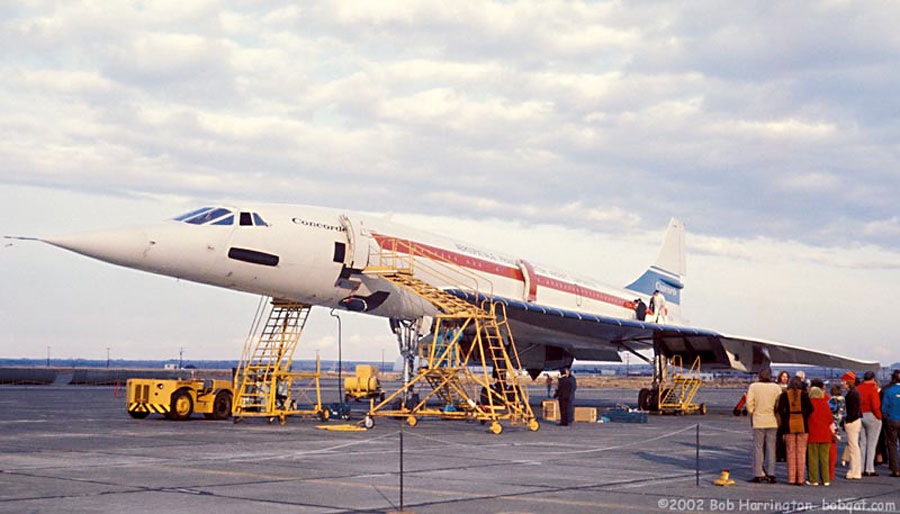
Interestingly — or at least, interesting to me — is that I work on that same very same ramp.
We don’t have any Concordes landing here nowadays.
[Randomness Begins]
We do have a bit of history that Grant County International KMWH helps along the way.
For example, the Eviation Alice electric twin-commuter is based here. I haven’t heard it flying yet. Perhaps I haven’t been within earshot on the occasion that it’s been in the air. Or the various GPUs, turbines, and such around me are just too noisy to notice its flights.
There’s not much GA that I’ve noticed at KMWH. I would guess it’s because KEPH is just up the road and is probably less expensive for General Aviation.
There are some typical small aircraft for flight school at Big Bend Community College on the south end of the field.
Then there’s the periodic arrival of various military aircraft. Things like V-22s and UH-60s, C-17s, P-8s, F/A-18s, and KC-135s. I haven’t noticed any KC-46s yet.
Then there’s the occasional 777 and 787. They often do rather expeditious ascents and they’re comparatively incredibly quiet even at takeoff power.
Oh, and the Boeing 737 MAX, which we see and release every now and again.
But still the same ramp.

 the rest of me