Sometimes it’s like that.

That is all.

Sometimes it’s like that.
That is all.
Ideas first
Tools second
Safety third
I’ve started learning [Ideas first] about oxyacetylene welding [Tools second] and the moment I walked into the welding lab, this caught my eye…
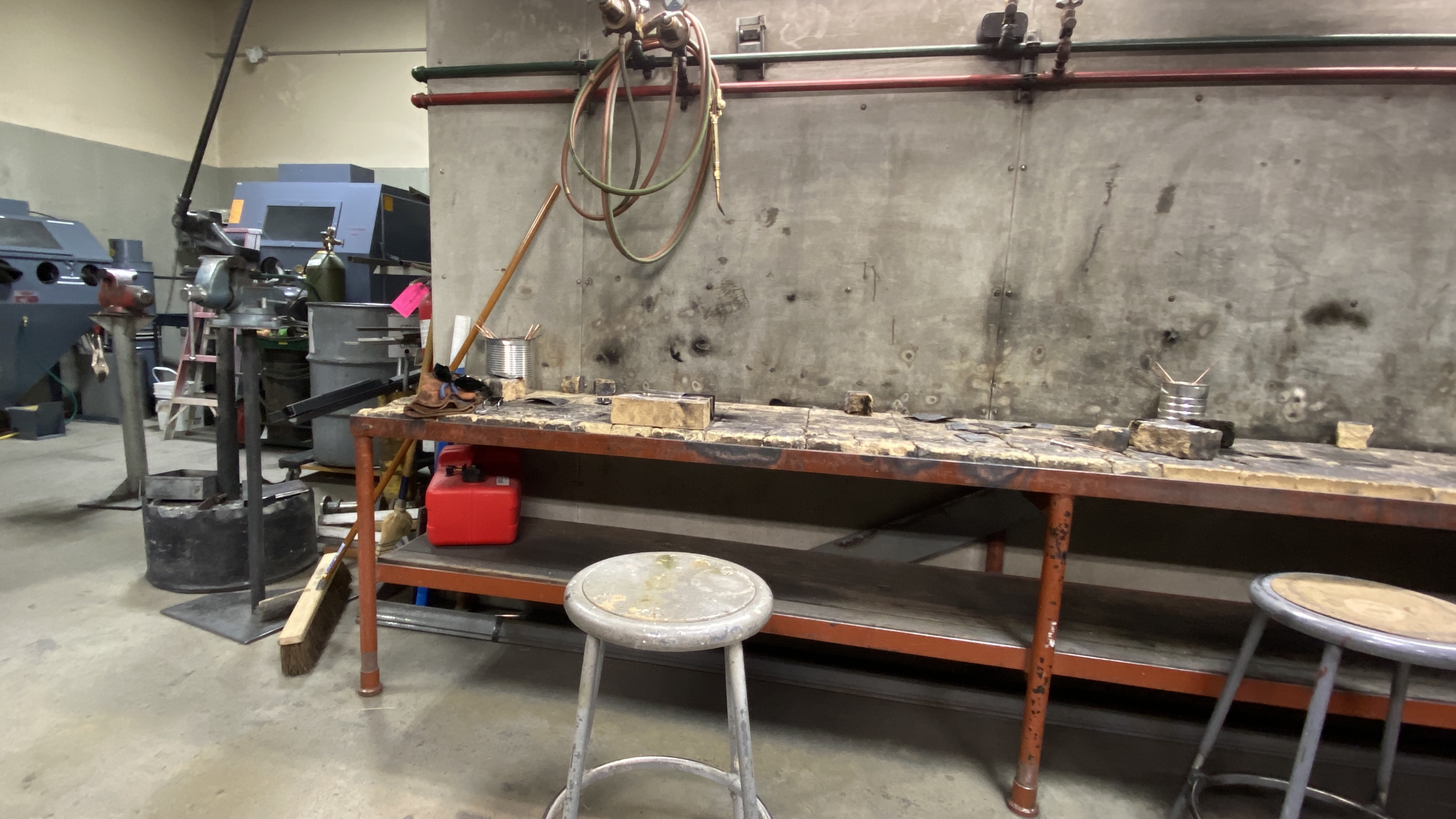
Flames. Acetylene gas. Oxygen. And a plastic gasoline can at the oxy-acetylene welding station.
I can’t help but wonder if this is an education tool to see who sees it and reacts to it.
I had previously admonished the use of Tool-Truck vendors.
I had remarked:
As a student or just starting out, do not buy the ‘best’ tool that can be had nor anything from some mobile tool [truck] purveyor.
Instead, buy the cheapest thing you can find that meets the actual needs you have right now. Not needs you think you’re going to have in the future. Learn to use it appropriately. Care for it. When it breaks or wears out, if repair isn’t plausible, then look for the best tool that in your learned and gained experience will meet your specific needs.
2020-09-02 – AMT Tools List
Fast forward a bit and I had posted another portion of the tools list that was rather expensive, and then another bit that would eventually be required for the Powerplant program. Some stuff was easy to come by. But a few other things, not so much.
Those pesky 1/4″ drive, universal/flex 12-point SAE sockets. [Insert satto voce annoyance mumbling here]
I’d have thought that there would be many plausible inexpensive options. Sure, the list specified “Genius Tools” and a specific product number. One could go over to the site and read all about it, but also see that it said “Out of stock” and to call some specific telephone number.
Okay, so let’s see where else we can find something comparable in the $35 – $50 range. Sure, metric sets were available.
Yet virtually nothing in US-aviation is metric. SAE only.
Oh, look — here’s a 3/8″ drive set of 12-point universal SAE sockets. Might be helpful. Maybe. But they’ll be taller and may not fit into tight space.
The list does specify 1/4″ drive… and as time progressed, it seems that they were extraordinarily rare. And over the months that I had waited and tried repeatedly, I wasn’t getting any response from Genius Tools.
I said I wouldn’t do it… but, let’s go look at Snap-On… hmm… $296. And Mac Tools? $310.
That’s more expensive than the $40 that Genius Tools had promoted the product at. About $263 more! But it’s becoming increasingly evident that it was extraordinarily unlikely — bordering on myth.
Then there’s the question of how much one’s time is worth. How much has it cost in the perhaps 40 hours that I’d expended to save that $263?
It seems I’ve already spent about $263 of my time in tracking down something cheaper. Do the math and it works out to $6.58 per hour.
So, here are the options:
Mac Tools
7-pc. 1/4″ drive SAE Universal Socket Set – 12-PT – 1/4, 5/16, 11/32, 3/8, 7/16, 1/2, 9/16: $295.99
Snap On
6 pc 1/4″ Drive 12-Point SAE Flank Drive® Shallow Universal Socket Set – 1/4, 5/16, 3/8, 7/16, 1/2, 9/16: $309
Looks that the Mac Tools offering is less expensive and includes a 11/32″ socket as well, so, ready to drop coin on it… son of a…

Awaiting a response from Mac Tools, or I’ll ring them when I’m done with chores.
—
Update: I looked over the Genius Tools page this morning while hammering out this post. On their product page, they now include a promising Add to Cart button. Quite a step up from the previously-used “Out of stock, call this number” note. So, I eagerly click it and…

I see what you did there. No doubt you were getting inundated with calls looking to purchase it, but instead you’ve removed the contact number to request it.
There are a staggering number of unnecessary quotes in the assorted writings presented from the instructors and educators that are new or struggling with this new-fangled “interwebz” thing.
Every single time that I see something wrapped in inverted commas, my eye starts twitching and everything.
So, instead–and I’ve no idea why I didn’t do this before–I’ve begun interpreting those unnecessary quotes as sarcasm quotes.
Adds a whole new meaning and entertainment to the writer’s message.
You’re welcome.
—
I’m looking around trying to find something to back the current thinking about pure acetylene’s propensity to spontaneously explode over 30 psig. Clearly, we have some limits on use/storage/movement/and so forth, but the curious part of me really wants to know “how did we learn that?”. I mean, a scientific paper describing how exactly that was determined would be great. But I stumbled across the above.
It’s not the result of a high-pressure explosion of acetylene, but instead of one high pressure cylinder that outgassed (secondary to the collision), then combusted either against a vehicle’s hot exhaust or was ignited by a rich-burning engine.
Then all hell breaks loose.
You’d want an acetylene cylinder to outgas when it’s being boiled. Much more preferable. Outgassing with a dangerous but impressive flaming spire is significantly more agreeable (they have plugs that will melt to release the gas) than having the 250 psi steel bottle burst and release its high-pressure acetylene+acetone mix into a flames.
Rapid decomposition ensues.
Fine… explodiness ensues.
Those bottles weigh perhaps 60 kg. Empty, they’re perhaps 55 kg. If you knock the valve off of it, it’s a rocket.
Those rockets are not at all predictable in their paths. While you -do- see those impressive flame plumes behind them, it’s not the fire accelerating them. Any acceleration is entirely from the gas pressure inside the cylinder.
Scary stuff.
So what about oxygen bottles? Typically oxygen bottles are at slightly higher pressure than acetylene. About 2000 psi compared to acetylene cylinder’s 250 psig. Industrial, medical, aviation — with a few uncommon exceptions (low-pressure O2 tanks for example), oxygen bottles are typically charged to about 2000 psig.
It’s a bit scary to see what even a small medical-grade O2 cylinder can do when its valve is expeditiously detached from a 2000 psi tank… inside of an old-style ambulance. That little rocket very quickly added an extra window to truck’s metal box.
Fortunately, while oxygen isn’t flammable, it does tend to aide in combustion. Think Fire Triangle. Fire would have been horrifying.
Speaking of oxygen and fires, many years after I observed the result of what an unsecured O2 cylinder could do to an ambulance, there was a guy who once used LOX to rapidly (instantly?) create a ready to use BBQ grill by using a single match. Ah… here’s it is:
 the rest of me