I honestly don’t really have a need for a function generator. This was inexpensive and small enough to fill an hour’s time.

The most time-consuming part was understanding what orientation the electrolytic capacitors were to be installed. While the silkscreen on the PCB did have an indication that the capacitors had to go one way, there wasn’t a positive/negative marking. So I guessed that the white on one half of the circle must equal white on the capacitor.

Oh, and peeling off the protective coating from the acrylic parts. There are a few bits still inside of some of the letters.
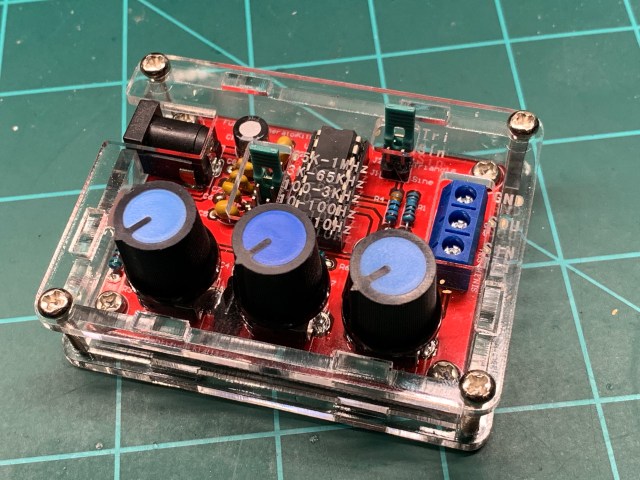
There’s probably a slightly more elegant function generator — actually, there are several and more expensive — but this will do for now.
Before I build too many more things, I should see about building a power supply. Maybe the ubiquitous LM317 would be a reasonably inexpensive and capable project.
Also, it seems to me that I’m continuing to do things backward.
How so?
Because one would think that learning tasks would start with simplistic concepts and work toward more complex. I started with the complex (the QCX project) and moved over/back/into this, the simple.

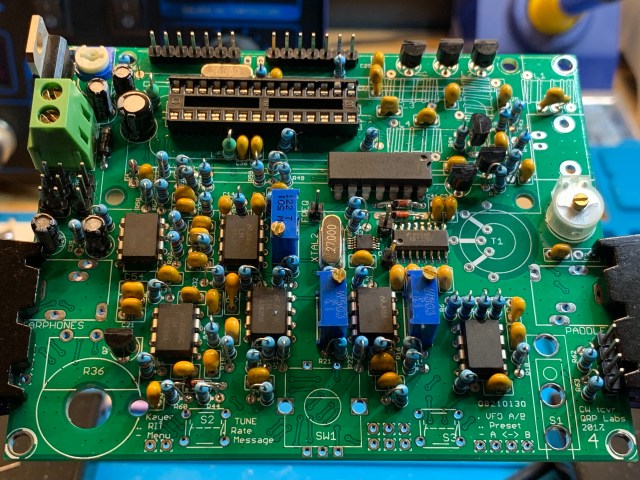


 Previously, it was the 20m QCX. Now it’s the
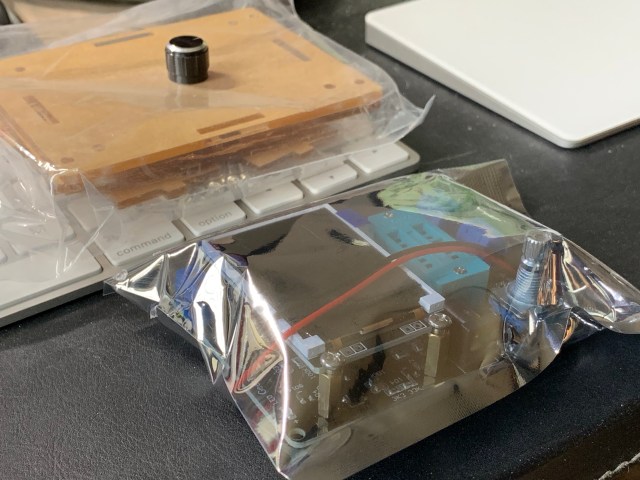 You know, I’m beginning to realize that I need to branch out — increase complexity and understanding of concepts — to keep things interesting and engaging for me.
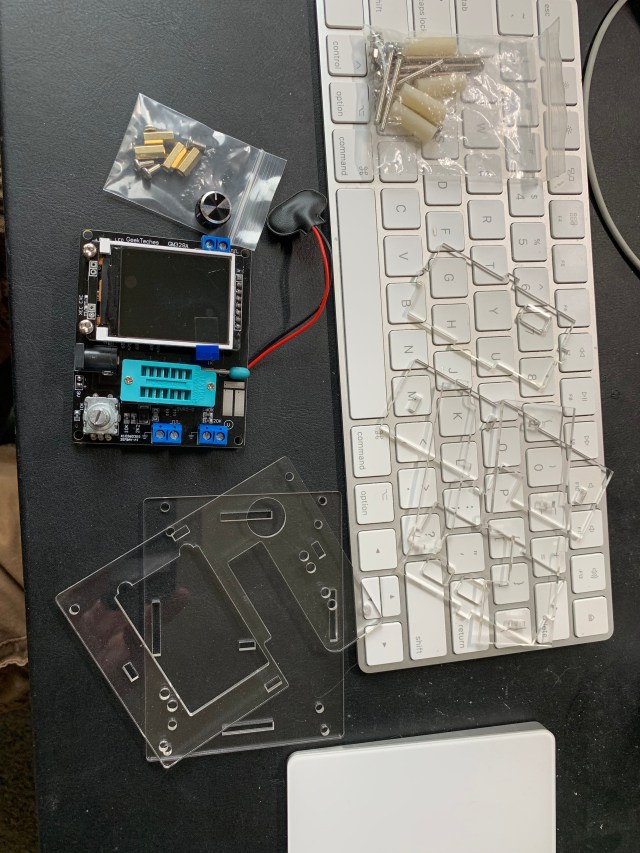
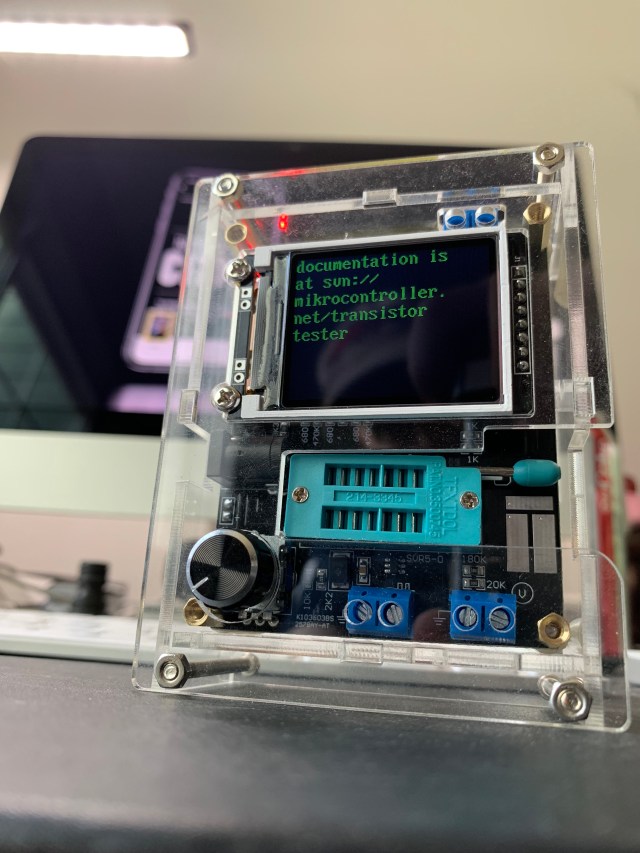 But, it works. I just need to go read the docs, do the calibration, then this is ready to use for other electronic/assmbly projects.
 the rest of me