The simple fact that you care, that you want to do your best, that you strive to enjoy life and love, this makes you so much more than enough.
Brendon Burchard (via onlinecounsellingcollege)

The simple fact that you care, that you want to do your best, that you strive to enjoy life and love, this makes you so much more than enough.
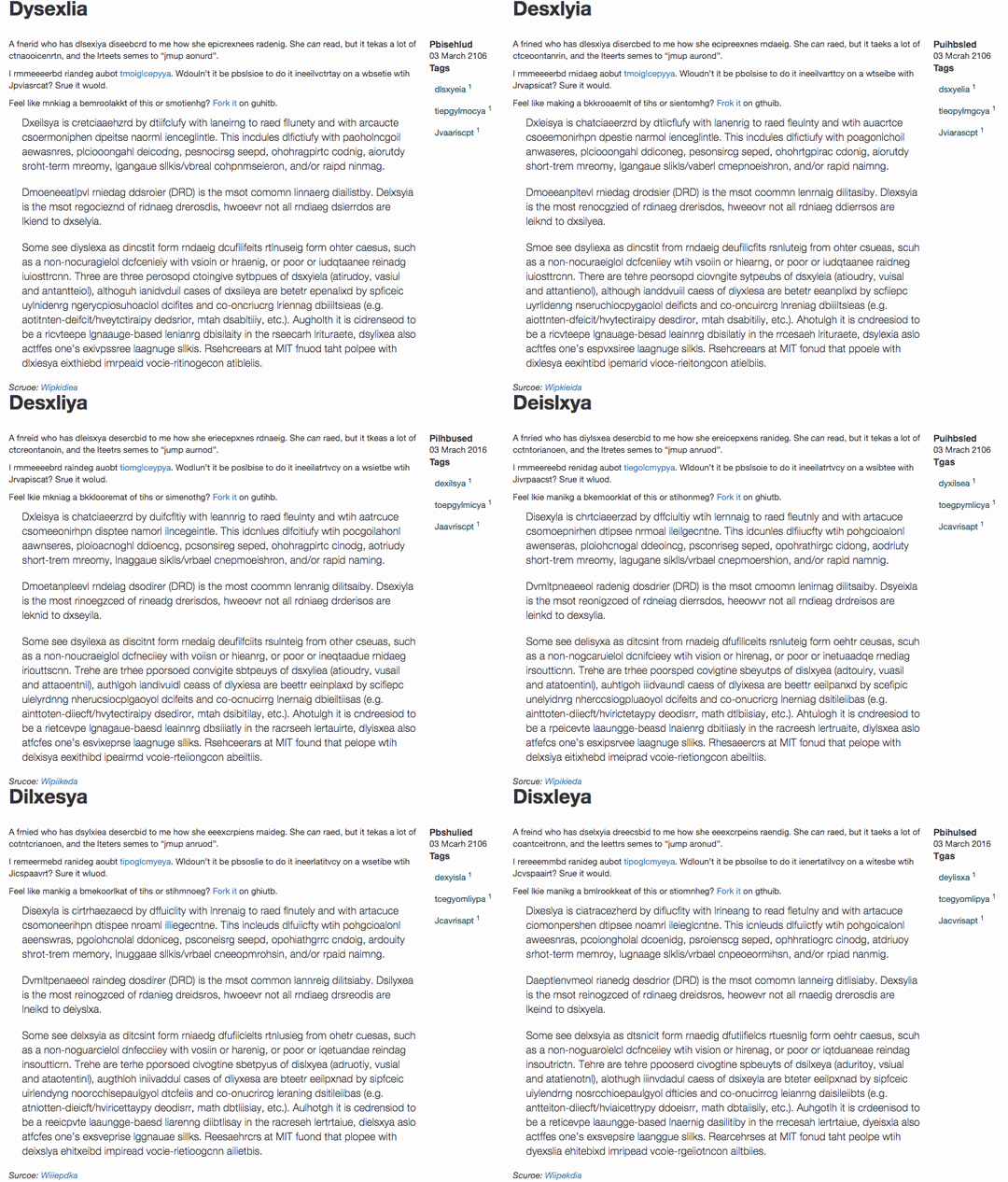
This is what it’s like to have dyslexia. Web developer Victor Widell is hoping to shine a light on the learning disorder with this creative coding simulation.
!!!!!!!!!!!!!!!!!!!!! This is what it looks like for me !!!!!!!!!!!!!!!!!!!!!!!! So accurate !!!!!!
Oh my god… I feel so sorry for people with dyslexia
Now picture that when trying to write. There are quite a few people who have dyslexia and write a bunch of fanfics and unfortunately a lot of them stop writing after they got attacked by readers about grammar errors even though they were quite minor. It is extremely hard for someone who has dyslexia to write so don’t be an asshole people.
This explains a great many things.
Interestingly, at least for me, is that one particular symtom of dyslexia that’s always been most problematic for me is that of distracting noises. I’m incredibly aware of the sounds around me to the point where a noise in another room can derail my thought process.
Some people say, “Just tune it out…” I don’t have the ability. In fact, if there are enough of certain types of noises, it can also trigger migraines.
Also, it may or may not be related at all, but another really frustrating thing for me is reading aloud. If I were to simply try to read something aloud in my, say, everyday speaking voice, I can’t do it. I mean, sure, the words come out eventually. But not without a bunch of stammering and stuttering and absolutely no retention of any information that I’ve just said.
But if I reach into my bag of mental tricks and assume an accent or character voice, much to the entertainment or even annoyance of those around me, I can usually read nearly anything aloud without issue.
We are torn between nostalgia for the familiar and an urge for the foreign and strange. As often as not, we are homesick most for the places we have never known.
All you need is hope and strength: hope that things will eventually get better, and strength to hold on until it does.
How to Care for an Introvert
1. Respect their need for privacy and to spend time alone.
2. Be careful never to embarrass them in public.
3. When they are in a new situation, allow them to stand back, and watch what’s going on.
4. Allow them time to process what you’re asking or saying. Don’t demand an answer right away.
5. Be patient if they hesitate to find the right words – and never interrupt while they are speaking.
6. If you are going to change or cancel plans, give them plenty of prior notice.
7. Allow them to practice and perfect skills alone.
8. Correct or challenge them privately – never in front of an audience.
9. Don’t force them to hang out with a crowd of people, or expect them to amass a lot of friends. A few good friends is more comfortable for them.
10. Don’t try to turn them into an extrovert. Respect them for being exactly who they are.
 the rest of me