Wish List?

A couple of things that we’ll probably be adding to the Want List:

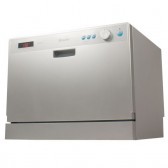
  • A countertop dishwasher, oh, yes… if  we can make the space for it. (Amazon)

  • A convection oven to replace the single-tasker models so common with RVs (Camping World)

  • A suitable kayak/canoe carrier for the roof of the vehicle. (Thule?) If we’re leaning toward a TT instead of a Fiver, then it could travel on a rack atop the TT. The problem, of course, is that I haven’t built the kayak yet (or possibly this one). Oh yeah, and I’ll require a suitable location to construct such a vessel when the time comes. I’m sure somebody somewhere rents garage space.

2014, RV Show #1

So, we made it to and through the RV show in Denver. The kids took it reasonably well, but they wanted to go inside -everything-. We had to keep redirecting them to “we’re looking at bunkhouses”.

What’s worse is that we did have to check out the innards of some specific makes and model-lines to see if they were suitable, but even though the display models weren’t what we wanted. So, from the kids’ perspective, we weren’t following our own rules.

Then we spotted, way back in the corner, a Sprinter 316 bunkhouse. Can’t link directly to this model’s page on the Keystone site (Why, Keystone? Why?!?), but a quick Google will yield some examples.


Keystone Sprinter WB 316BIK.

Big bunk room.

Nice kitchen with island sink and work surface. A nice overhead cabinet that we seem to have missed in some of the web research and that clearly isn’t indicated on the plans.

I do prefer an en suite bath, which this doesn’t have. To get a nice en suite with a half-bath for the kids, we’d need to look more seriously at fifth wheels. But those features put us in a weight class that requires a notably larger tow vehicle. So, a single full bath will be fine.

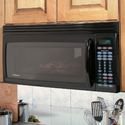
One thing with which I’m not at all impressed was their microwave/range vent combination as its installation really seems like an afterthought to an otherwise well-considered arrangement.

Let me explain.

It has a large kitchen with a good counter and workspace. But when they got to the mass-produced, mini-microwave, they stuck it inside of an overbuilt cabinet, under which they’ve slapped on the typical range light and vent hood.

And?


Great island workspace with full-size sink, overhead cabinet with good light. But the microwave/range hood is so low that it looks like it’s on final approach for a landing on the cooktop.

The downside is that it leaves little vertical space for cooking. Even worse, if one tried to use it as-is, one will need to regularly slouch down to get a viewing angle on the pots on the rear burners… and I’m only 5’7″.

Methinks an early modification would be to find a competent installer to remove all of that nonsense and just put in one of those Dometic convection/microwave/light/vent units.

That one complaint aside, I think this could certainly become the next trailer to begin our full-time RV-living career.

Bunkhouse Floor Plans

While, on the surface, there appear to be hundreds of combinations of floor plans available for RVs, what we’re seeing in our regular web surfing is that this may not necessarily be the case.

In the bunkhouse-classes of RVs that we’re considering for full-time use, it’s becoming clear that there are, in very general terms, a few minor variations in the arrangements of the major living spaces in each trailer.

This might be related to the periodic model upgrade evolution from manufactures, but here’s what we’re seeing for the most part in the existing models and the model previews for 2014:

Bunk rooms are typically either:

  1. Fixed, built-in with either twin-sized or double-sized beds. The double-sized are often the chamfered- or rounded-corner type.
  2. Fixed bunk rooms with bunks two to three high on either side of the coach.
  3. Slide-out bunk rooms that have at two or more bunks, but often options for either a sleeper-sofa, foam lounge-type chairs, or a small dinette table or booth.

There are two types of Living/Dining arrangements and they’re both slide-outs with a couch of the sofa/sleeper variety and:

  1. A dining table and chairs, or
  2. A full or U-booth dinette.

We have noticed that a few manufacturers have started to exclude the small sofa and dinette combinations, replacing them with a jumbo-sofa. Neat idea, we think, but pretty rare. We’ll look forward to seeing this in future models.

Kitchens are typically two varieties:

  1. Single-wall-mounted, L-type, or
  2. Island-sink centrally-located to the coach with a slide-out on which all other appliances are typically installed.*

There are, of course, efficiencies to be had by manufacturers who buy hundreds or thousands of completely identical appliances to install in RVs. That that three-burner range with the microscopic Easy-Bake-Oven, for example: is that really the only thing available in the world?

Bathrooms seem to have the most variability and are commonly:

  1. ¾ or full bath,
  2. centrally-located (aft of the kitchen), or
  3. en suite, toward the front of the coach, or
  4. a ¾ en suite with a ½ bath aft, which typically has a separate exterior door

Master suites, too have a bit of variation:

  1. bed in-line with the coach, or
  2. bed transverse, on a slide, or
  3. bed fixed but with cabinets or dressers on a slide

There are of course some variation in finishes and fixtures. Some fifth-wheel class trailers have space for an RV washer/dryer. And many travel trailers have an outdoor kitchen space, too.

So, yes, there are some choices to make. Floorplans don’t tell the entire story. It may be that seeing something you don’t like initially on a floor plan may be insignificant when you see it in person — or vice versa.

Fortunately, there are a few RV shows coming up near us. One each in January, February, and March.

I suppose we should put together a list of models and features we want to see.

Which RV?

When wading into the Full-Time RV waters, one quickly sees that there are hundreds of choices in teardrops, popups, hybrids, travel trailers, fifth wheels, and motorhomes. There’s just so much to choose from.

I’ve even seen people pulling medium-sized travel trailers behind large motorhomes!


Found on the web: A motorhome towing a custom-painted travel trailer.

Clearly, we need to set some ground rules that will help us to decide what trailer we want to call home. Some of our starting requirements:

  • New. Yup. I said it, “New.” Not used. Not “pre-owned”. Not “gently-loved”. New. That doesn’t mean that one can’t find great deals on last-year’s models still taking up space on dealer’s lots. In fact, those would be ideal for us.
  • Towables only; no motorhomes. “New” means that the entry cost of a current-model motorhome is incompatible with our budget predictions.
  • Hard-side models only. The comfort we prefer in the climate extremes in which we’re interested aren’t necessarily well-suited to the canvas walls or bed ends of popups or hybrids for full-time use.
  • Fixed beds for everyone. Lots of RVs claim to sleep 8 or 10 people, but with the exception of the owner’s queen- or king-sized bed, it often requires that you unfold a couch or transform the dinette into a bed. We want our kids to each have a bed that doesn’t require rearranging the living space to get to it.
  • Sufficient storage for bicycles, outdoor furnishings, tools, and support equipment for the RV.
  • Indoor sanitation*. A full bath is a plus, but ¾ bath is a minimum.
  • Full kitchen facilities*. Sink, refrigerator, cooktop, oven, microwave or convection oven combination.
  • Heat and A/C*. The extremes in our preferred environment can be from 15F to 95F, so a bit of modern machinery to maintain comfort is important.

Those last three items are usually standard equipment on every modern towable.

So, essentially we’re looking at new, bunkhouse-type travel trailers and fifth wheels.

There are still lots of choices in that regard. Here are a few representative models in varying sizes that tend to fit those criteria:

Small


Jayco 228: A wonderful little travel trailer that has all of the amenities. But, for full-time use for our family of four, we think it’s just too small.

Medium


Jayco Half-Ton 27.5BHS: A fifth-wheel with what we would consider our minimum livable space.

Large


Coachman Freedom Express 320BHDS: Those larger slides make a more spacious interior. It’s toward the larger end for our preference in travel-trailer-class towables.

Jumbo


Heartland Cyclone CY4100KING. How about a two bedroom (one is a loft), 1-½ bath, with a one-car garage, and a deck? Very nice, but possibly too big for us!

Again: these are just broadly representative of the choices out there. Presently, we can look for the Goldilocks trailer — it’s not too small, not too large, but just right for us. We have some time.

Where We’re Going

We’ve really enjoyed our little Jayco trailer.

Sure, the geriatric Pathfinder struggles a bit with it, but it does nearly double its weight, so that’s understandable. Add its age to the altitude and multiply by the grade of an uphill climb and we sometimes struggle to stay above 35mph.

Our wee home away from home.

Anyway, even if we can only get away for a weekend to the State Park that’s only 3 miles away, we consider it a worthwhile trip.

We’ve so far been in temperatures as cold as about 24F and as hot as 90F. As long as there’s electricity, it’s pretty comfortable for us.

There are a few things we’d like to change on our little trailer. Memory foam mattress toppers, some bunk-end covers to take the edge off on both the hottest and coldest days and nights, a larger tow vehicle, maybe one of those awning-screen-room add-ons.

We’ll get to them as finances for our house and time permit.

Last September, we went up to St. Vrain State Park north of Denver for a weekend. I wasn’t feeling well and was a bit additionally stressed out by work.

That Saturday evening, while pondering aloud after possibly imbibing in one too many bottles of carbonated, fermented goodness, I cracked open my Chinese takeout fortune cookie (hey, sometimes you just don’t want to cook)…

One wonders how many ideas were the result of slightly too much porter with a fortune-cookie catalyst.

“What if we were to do this full-time?”

“What do you mean?”

“I wonder if it would be cheaper to just have the RV than just the house. What if we were to sell the house and live in an RV full-time for six months… or a year… or two?”

She knew I wasn’t talking about this specific trailer. Sure, it’s entirely possible to live in it full time, but I don’t think our kids (or Daisy’s sanity) would tolerate it.

“We could move back to Washington,” she added, “Be closer to our families.”

“Or at least we’d certainly not be tied down by the house so we could get up there more often.”

The next weekend, which happened to be when the torrential rains were overtopping dams and flooding much of northern Colorado, we started looking at larger and larger travel trailers. I think she was spending more time looking than even I was.

It was then that we decided which course we wanted to take. We don’t know exactly what the roadmap looks like yet and we don’t know exactly when it will be, but we are absolutely convinced that right now, home ownership, here, isn’t for us.

It’s time to downsize dramatically for what we would consider a psychological reboot and a drastic change in our current lifestyle.

But how do we really start?