Getting a bit more challenging…

My soldering is improving.

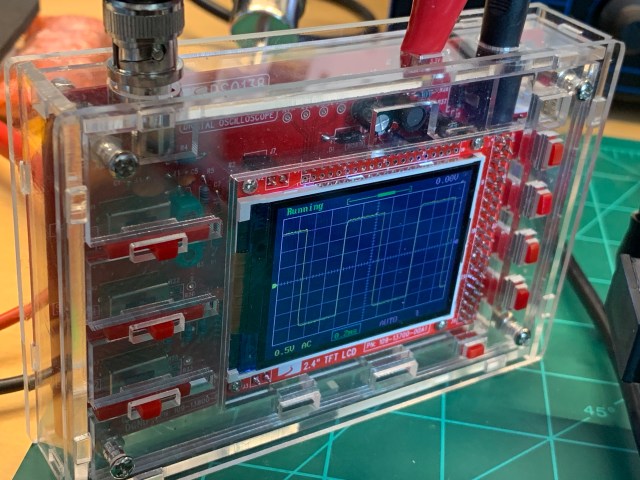
This is a DSO 138 Oscilloscope that I assembled from a provided combination of discrete parts. The purveyors only ensured two required SMD* chips were factory-attached.

At the US$22 entry price, including the housing, it was a fun and affordable project.

If you take one of these on as a project, be sure to do its calibration before assembling into the housing.
8cuMiwLyRBetIXRy3X8qow

I’m sure there are also 3-wire or 4-wire probe combinations that I can add on in the future.

Next: Maybe I’ll start on a QRP-Labs QCX transceiver and see about obtaining a CW paddle… or maybe just turn it into a WSPR beacon.

*SMD chips are so small that they are often beyond the ready ability of most kit-builders because; they’ll require specialized special equipment to make them visible and differing soldering techniques.

Heisenberg Monitoring Uncertainty Principle

In certain implementations of software monitoring solutions, the type, quantity, and frequency of monitoring – the system or service checks – can result in an increase in load on the systems being tested. This increased load can lead to the flawed interpretation that additional monitoring tools are necessary to identify the load factors, resulting in further-increased load.

Or, to summarize: throw so much monitoring at a platform that it unexpectedly increases load, which prompts additional monitoring. Repeat.

Or, to summarize the summary: You cannot observe any system without impacting it.

Slide Rule

A 1972-model, new in package, Sterling slide rule. It’s no longer “new in package” as I’ve bought it specifically to use it whilst we teach our children some higher-level maths. For example, we’re teaching them complex multiplication using the old carry and add method.

She was absolutely astonished when I showed her how to solve things faster on a slide rule than the time it takes to open the calculator app and type in the numbers.