Apple Card & The Future Of Spend

I absolutely love the idea of the Apple Pay.

A single device that you have with you all the time that affords you the touchless transaction experience.

In Europe, they’ve been using NFC (Near Field Communication) — the same technology that Apple Pay uses — for transactions for years. They typically refer to the concept as “touchless”.

North America is finally moving in that direction.

You have your phone, so NFC is literally at your fingertips. If you have an Apple Watch, you can even catch people off-guard by just waving your hand around a pay kiosk like a Jedi.

Right, so it seems that NFC is too advanced for some — or too trivial and easily exploited for some others — and in several places, they only support chip-cards, which require physical contact.

Apple has revealed their new concept for an Apple Card. A card for those occasions when businesses haven’t quite stepped into the 21st century with NFC… er, I mean… for those businesses that don’t yet support Apple Pay, and are still dependent upon a physical card with a chip. A single card that

  • is meant to integrate seamlessly with Apple Pay
  • contains the encryption enclave chip
  • doesn’t have a trivially-skimmed or accidentally-erased magnetic stripe
  • presents only your name: has no trivially-exploited card number, card security code, expiration date emblazoned across it —  that’s human-readable and exploitable by onlookers or malicious parties

Yes, please.

No, it’s not perfect — nothing is perfect and if you wait until it is, then you’ll be waiting forever. But it certainly is intriguing.

Oh, and you won’t have to charge it.

But something is bugging me: what about those establishments that haven’t yet joined us in the 21st century to use the latest, more secure technologies? Those companies that only support magnetic stripe cards?

You know, things like fuel pumps.

It seems that I’ll need to retain my card for the periodic swipe until we can move everyone else culturally and socially into the future of commerce.

Or find a way to simply no longer need to use them.

The Apple Card? Yep, I’ll be one of the early adopters and even look into transferring my other credit cards’ balances to it.
The Panacea-Tool Incident

A few years ago — 2014 maybe? — we were in the early days of distributed teams and were spread across three timezones. Timing was awkward. So, many of us would start our day from home to join calls and meetings. This was, for us the beginnings of regular telecommuting. To help ease the communications challenges, we also embraced the concepts of video conferencing, screen shares, and multimedia to communicate.

One morning, there was expert brought in to demonstrate and train the lot of us on the new Panacea that the company had invested in: an app that would help manage all of our systems. It was a unified, do-everything tool that would provide visibility of specific known-states and anomalies on any number of systems across our several geographic locations and datacenters. It would pin down the precise, exact origin of a problem, and eliminate the need to log into a server (via SSH, of course) ever again… in order to resolve the issue.

Anyway, while doing the demo, there was this one error that would occur, which would prevent moving any further with a demo or training.

It was something about a missing object, or log file, or permissions to it.

If only there was a tool that had the power and capacity to identify the problem and resolve it… we could use that. It would be a perfect opportunity!

Their sales engineer was stumped.

After he fought with it for half an hour or so, I suggested, that we take a quick look at the actual logs on the system. Odds are pretty good that they’d indicate where the problem was. There was no harm in checking.

“No!” he’d assert. “That’s the wrong way!” And we endured continuous rants of frustrations and borderline vulgarities from him. “This guy!” he had jokingly exclaimed, “What you want to do is impossible!

Oh, I’m sorry… I thought you had used the word, “IMPOSSIBLE.” just there.

Challenge accepted.

I quickly shared my screen and jumped over and skimmed the actual logs from the app on the server itself. Let’s see… at the end of the log file, it had logged that it had crashed. Why? Scroll up a few lines and… permission denied trying to write to one of its own files.

“Oh! I’ll just ‘chmod’ that file so its owner can write to it…”

He boisterously interrupted, “If that’s it, I’ll buy you a steak dinner!”

**tap,tap,tap** **Enter** “Okay, all set… let’s give it another try really quick…”

The problem went away. He was clearly offended that somebody could’ve done it “the wrong way” to find the problem and fix it so quickly.

Took about 20 seconds.

And the really amusing part is that all of this was perfect scenarios to demonstrate the power and capability of the app itself.

Getting a bit more challenging…

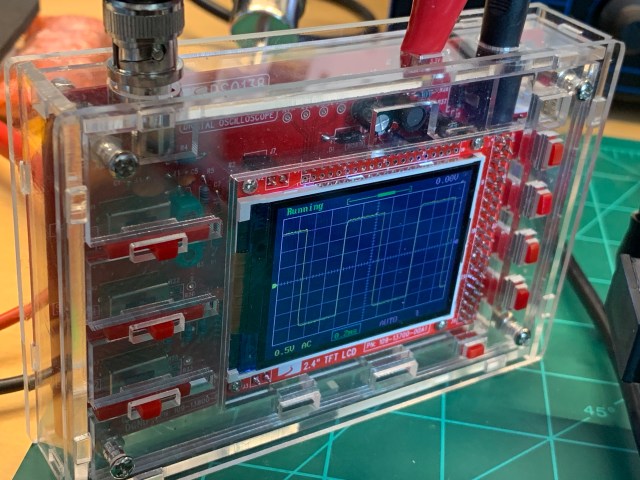
My soldering is improving.

This is a DSO 138 Oscilloscope that I assembled from a provided combination of discrete parts. The purveyors only ensured two required SMD* chips were factory-attached.

At the US$22 entry price, including the housing, it was a fun and affordable project.

If you take one of these on as a project, be sure to do its calibration before assembling into the housing.

8cuMiwLyRBetIXRy3X8qow

I’m sure there are also 3-wire or 4-wire probe combinations that I can add on in the future.

Next: Maybe I’ll start on a QRP-Labs QCX transceiver and see about obtaining a CW paddle… or maybe just turn it into a WSPR beacon.

*SMD chips are so small that they are often beyond the ready ability of most kit-builders because; they’ll require specialized special equipment to make them visible and differing soldering techniques.

Technically correct…

Whenever I see wordy output or excessive logging data, I’m reminded of that old joke about a Microsoft Engineer vs. a pilot.

It’s thorough, complete, and technically accurate… but completely useless.

Found originally back in the early 1990s, reworked/reworded over time, pasted here for posterity, and because I don’t want to go following dead links again:

A helicopter was flying around above Seattle when an electrical malfunction disabled all of the aircraft’s electronic navigation and communications equipment.

Due to the clouds and haze, the pilot could not determine the helicopter’s position and course to fly to the airport.

The pilot saw a tall building, flew toward it, circled, drew a handwritten sign, and held it in the helicopter’s window. The pilot’s sign said “WHERE AM I?” in large letters.

People in the tall building quickly responded to the aircraft, drew a large sign and held it in a building window. Their sign read: “YOU ARE IN A HELICOPTER.”

The pilot smiled, waved, looked at her map, determined the course to steer to SEATAC airport, and landed safely.

After they were on the ground, the co-pilot asked the pilot how the “YOU ARE IN A HELICOPTER” sign helped determine their position.

The pilot responded “I knew that had to be the Microsoft building because, like their technical support, online help and product documentation, the response they gave me was technically correct, but completely useless.”

Life With a TBI

My head [is] so full of things to say or share or do… but sometimes, before they get out, I forget.

So I take notes.

Lots of notes.

Sometimes actually writing things down.

Ideas, thoughts, stories, plans, sketches, pictures — our current technology helps me maintain focus.